 admin
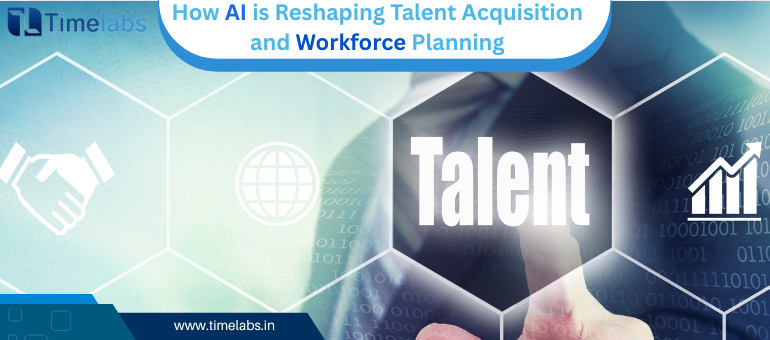
adminThe way organisations find, hire, and plan their workforce has changed significantly over the last few years. Artificial Intelligence is no longer a technology reserved for large corporations with deep pockets. Today, businesses of every size are using AI to make faster hiring decisions, reduce manual workloads, and predict workforce needs before they become problems.
From sorting through thousands of resumes in seconds to identifying skill gaps within existing teams, AI is playing a hands-on role across every stage of the employee lifecycle. This article explores how AI is transforming talent acquisition and workforce planning, and what it means for HR teams in India and beyond.
The Shift in Talent Acquisition
How AI Screens and Shortlists Candidates
Traditional hiring was slow and heavily dependent on manual effort. HR professionals would spend hours reviewing applications, many of which were not relevant to the job at all. AI has changed this entirely.
Modern HR Software uses machine learning algorithms to scan applications, match candidate profiles against job requirements, and rank them based on relevance. This reduces screening time by a significant margin and allows HR teams to focus on conversations that actually matter.
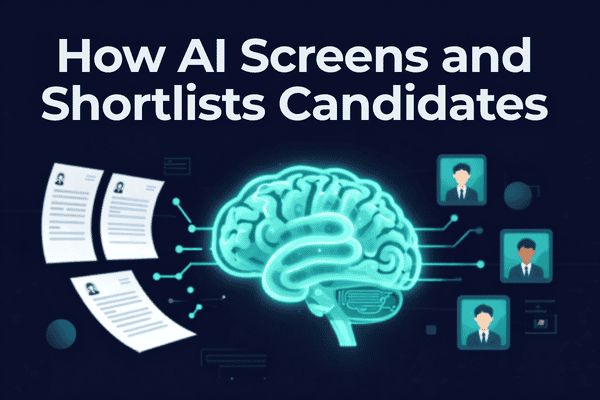
AI-powered tools can also identify patterns in successful past hires and use that data to predict which applicants are more likely to perform well in a given role. This is not guesswork. It is data-driven decision-making at scale.
Reducing Bias in the Hiring Process
One of the most talked-about benefits of AI in recruitment is its ability to reduce unconscious bias. When a human reviews a resume, factors like name, college, or location can sometimes influence the decision, often without the reviewer even realising it.
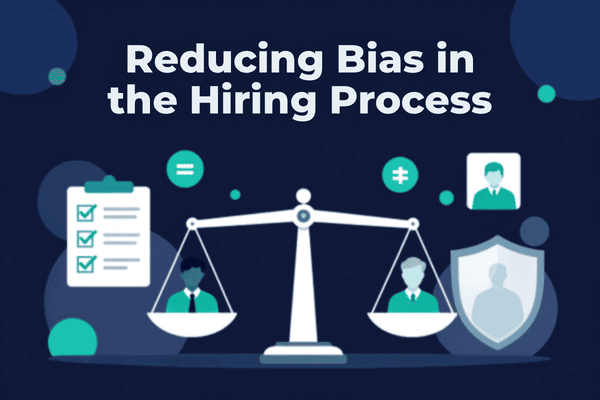
AI-driven HR Software evaluates candidates based on skills, experience, and role fit rather than personal identifiers. This results in a more objective shortlisting process and helps organisations build more diverse and capable teams over time.
It is important to note that AI is not perfect. The quality of AI recommendations depends heavily on the quality of data it is trained on. However, when implemented thoughtfully, it does make hiring more consistent and fair.
Improving Candidate Experience
AI also works on the candidate side of the equation. Chatbots powered by AI can answer candidate queries at any time, schedule interviews automatically, send reminders, and provide real-time status updates on applications.
This creates a smoother experience for job seekers and reflects well on the employer brand. A well-configured HR Software platform integrates recruitment workflows with the broader HRMS system. Timelabs ensures that once a candidate is selected, their onboarding journey begins without any manual handover between tools or teams.
AI and Workforce Planning
Predicting Workforce Needs Before They Arise
Workforce planning used to rely heavily on historical data and gut instinct. Managers would estimate headcount requirements based on past trends and seasonal demand, often resulting in overstaffing or last-minute scrambles to fill critical roles.
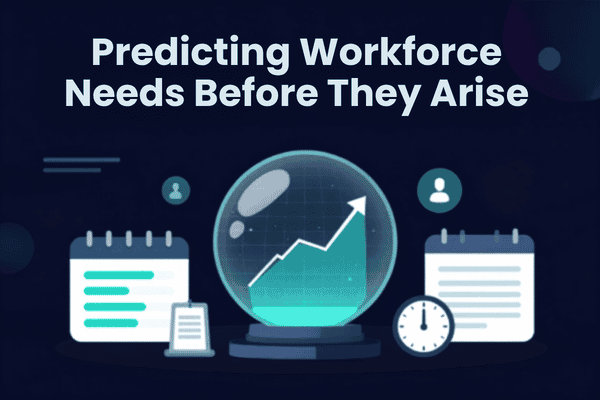
AI changes this by processing large volumes of operational data, attendance patterns, attrition trends, and business forecasts to generate accurate workforce predictions. HR teams can anticipate which departments will need additional resources months in advance and plan accordingly.
This kind of forward-looking planning reduces hiring delays and ensures that the right people are available at the right time, without unnecessary overhead costs.
Identifying Skill Gaps Across the Organisation
One of the most practical applications of AI in workforce planning is skill gap analysis. As industries evolve and job requirements change, organisations need to understand whether their existing workforce has the capabilities to meet future demands.
This is where Performance Management Systems become critical. When AI is layered on top of a solid performance framework, it can analyse employee performance data, learning history, and project outcomes to identify which skills are missing across teams, departments, or the entire organisation.
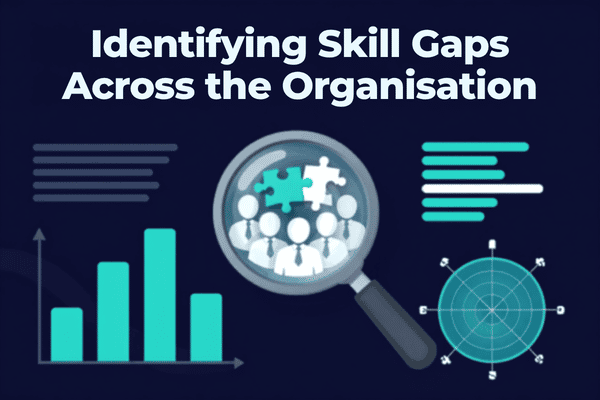
With this insight, HR teams can design targeted upskilling programs rather than spending training budgets on generalised courses that may not address actual needs.
Reducing Attrition Through Predictive Signals
Employee attrition is one of the most expensive problems HR teams face. The cost of replacing a skilled employee goes beyond just recruitment. It includes lost productivity, training time, and the knowledge that walks out the door.
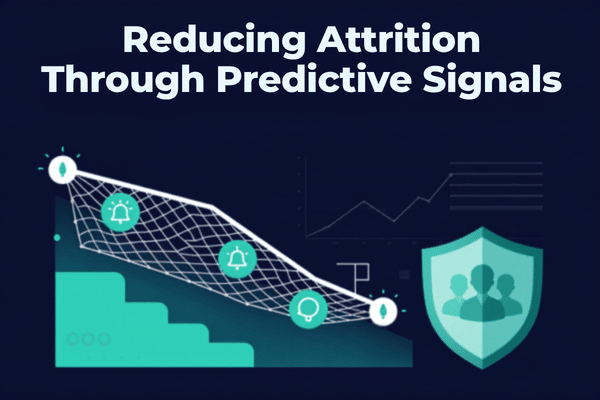
AI-driven Performance Management Systems can detect early warning signals of disengagement. Patterns such as declining performance scores, reduced participation in team activities, or an increase in leave applications can be flagged before an employee decides to resign.
This gives HR managers a window of opportunity to intervene, whether through a conversation, a role adjustment, or a development opportunity, before the decision becomes final.
Aligning Hiring Plans with Business Growth Cycles
Growing businesses often struggle to align their hiring plans with actual business cycles. AI-powered Performance Management Systems help bridge this gap by connecting workforce capacity data with business output metrics. When productivity data is mapped against business goals, HR leaders can make hiring recommendations that are tied to real demand rather than projected headcount alone.
The Role of HR Analytics in AI-Driven Decision Making
Turning Data into Actionable Workforce Insights
Data has always existed in HR. Payroll records, attendance logs, appraisal scores, and hiring timelines hold a wealth of information. The problem has always been that this data was siloed across different systems and rarely analysed in a meaningful way.
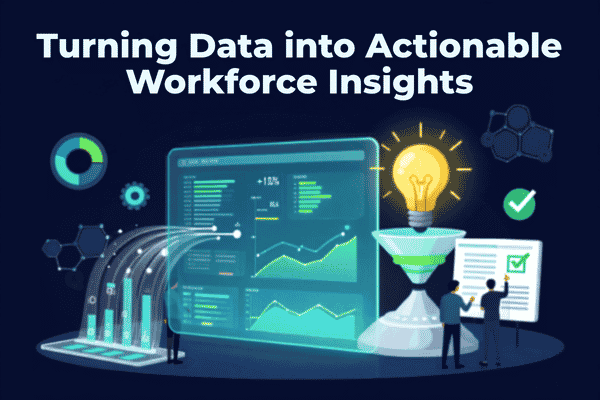
HR Analytics changes this by bringing all of this data together into a single view. HR leaders can now see the full picture of workforce health, from turnover rates and absenteeism to training ROI and hiring funnel efficiency. With AI processing this data, the insights become faster and more accurate.
Timelabs offers built-in HR analytics dashboards that surface these metrics without requiring HR teams to manually compile reports. This saves significant time and allows leaders to make decisions based on current data rather than outdated summaries.
Using Analytics to Improve Hiring Quality Over Time
One of the long-term benefits of HR Analytics is the ability to evaluate the quality of hiring decisions over time. By tracking how new hires perform, how long they stay, and how their performance compares to predictions made during the hiring process, organisations can continuously refine their recruitment approach.
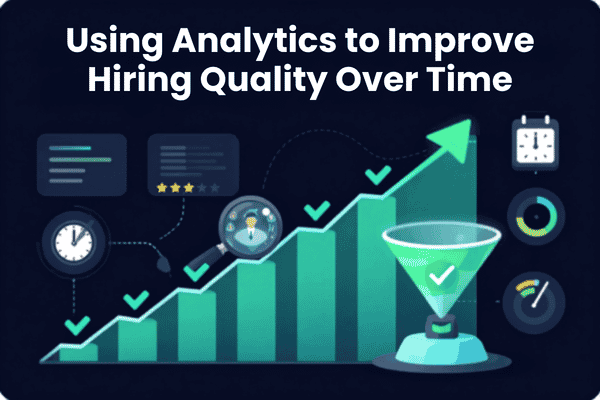
This feedback loop is what separates reactive HR from strategic HR. Instead of repeating the same hiring mistakes, organisations learn from their data and improve with every cycle.
Measuring the Effectiveness of Workforce Planning Strategies
Strategic workforce planning is only as good as the ability to measure its outcomes. HR Analytics provides the tools to track whether headcount forecasts were accurate, whether skill development programs delivered the expected results, and whether attrition rates have improved following specific interventions.
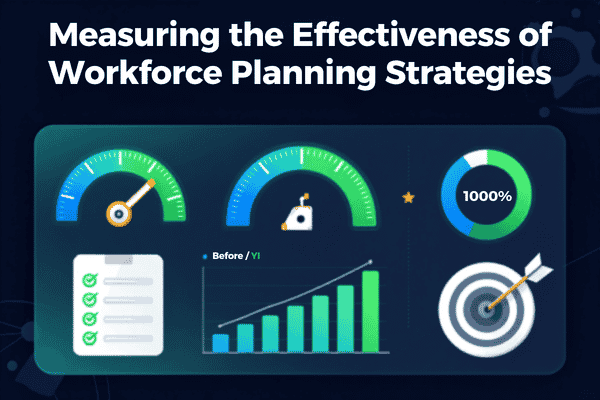
For organisations using Timelabs, these analytics are integrated directly with payroll, attendance, and performance data, giving HR teams a single source of truth for all workforce metrics.
What This Means for HR Teams in Practice
The adoption of AI in HR does not mean that human judgment is no longer needed. On the contrary, AI handles the repetitive, data-heavy tasks so that HR professionals can focus on work that genuinely requires human skills: building relationships, navigating complex situations, and driving culture.
Here is what AI-enabled HR looks like on the ground:
- Recruitment teams spend less time screening and more time talking to high-quality candidates
- HR managers receive alerts about potential attrition risks before they escalate
- Learning and development programs are designed around actual skill gaps, not assumptions
- Workforce plans are built on data-driven forecasts rather than estimates
- Reporting is automated, freeing HR teams from hours of manual data compilation
The organisations that will benefit the most from AI in HR are those that invest in the right tools and ensure that their HR teams are equipped to interpret and act on the insights those tools provide.
Conclusion
AI is not replacing HR. It is making HR better. By automating routine tasks, surfacing meaningful insights, and enabling proactive decision-making, AI is helping HR teams deliver more value to their organisations than ever before.
For businesses looking to modernise their HR operations, the starting point is choosing the right platform. Timelabs offers a comprehensive HRMS that brings together payroll, attendance, recruitment, performance management, and analytics under one roof, giving HR teams the foundation they need to make AI work for them.
The future of talent acquisition and workforce planning is data-driven, proactive, and deeply informed by AI. The organisations that embrace this shift today will be the ones with a clear hiring and retention advantage tomorrow.
Must Read: How AI is Empowering the Rise of Flexible Work Models
Frequently Asked Questions (FAQs)
Q1. How does AI improve the talent acquisition process?
Ans: AI improves talent acquisition by automating resume screening, matching candidates to job requirements based on skills and experience, reducing unconscious bias, and providing real-time updates to applicants. This speeds up the hiring process and improves the quality of shortlists that HR teams work with.
Q2. Can small businesses benefit from AI-powered HR tools?
Ans: Yes. AI-powered HR tools are no longer exclusive to large enterprises. Many modern HRMS platforms, including those designed for growing businesses, offer built-in AI capabilities for recruitment, attendance tracking, and performance monitoring at affordable pricing. Small businesses can benefit from faster hiring, reduced manual effort, and better workforce visibility.
Q3. What role do Performance Management Systems play in workforce planning?
Ans: Performance Management Systems collect and organise data on employee goals, appraisals, feedback, and skill development over time. When AI analyses this data, it can identify skill gaps, predict attrition risks, and help HR teams make informed decisions about promotions, transfers, and training investments, all of which are central to effective workforce planning.
Q4. How does HR Analytics help reduce employee attrition?
Ans: HR Analytics helps reduce attrition by identifying patterns that often precede resignation, such as declining performance scores, increased absenteeism, or reduced engagement. With this data available in real time, HR managers can intervene early with conversations, role adjustments, or development opportunities before an employee decides to leave.
Q5. Is AI in HR a threat to HR professionals?
Ans: AI is a tool, not a replacement. It handles time-consuming, data-heavy tasks like screening, reporting, and pattern analysis. This frees HR professionals to focus on higher-value work such as talent strategy, employee relations, culture development, and leadership coaching. The role of HR is evolving, not disappearing.