 admin
adminRunning a business means carrying the responsibility of staying compliant with ever-changing labour laws and government regulations. For many organisations, this is one of the most challenging aspects of workforce management. Missing a statutory deadline or incorrectly calculating employee entitlements can lead to costly penalties and legal disputes. This is exactly where HR Software steps in as a reliable solution. By automating compliance-related tasks, maintaining accurate records, and generating timely alerts, it helps businesses of every size remain on the right side of labour codes without the guesswork.
Understanding Labour Code Compliance in Today’s Workplace
Labour codes are rules and regulations that govern the relationship between employers and employees. They cover a wide range of areas including working hours, minimum wages, provident fund contributions, gratuity, leaves, and workplace safety. In India, the central government has consolidated over 29 central labour laws into a unified framework through four major labour codes. Businesses are now expected to comply with the Code on Wages, the Industrial Relations Code, the Code on Social Security, and the Occupational Safety, Health and Working Conditions Code.
Non-compliance does not just attract fines. It can damage the reputation of an organisation, lower employee morale, and in some cases even lead to criminal liability for business owners. This is why having a reliable system to track and manage compliance requirements has become a necessity rather than a luxury.
The Role of HR Software in Labour Code Compliance
HR Software is no longer just a tool for managing attendance or processing payroll. Modern platforms like Timelabs offer a comprehensive suite of features designed to simplify compliance at every level. Here is how such platforms make a real difference:
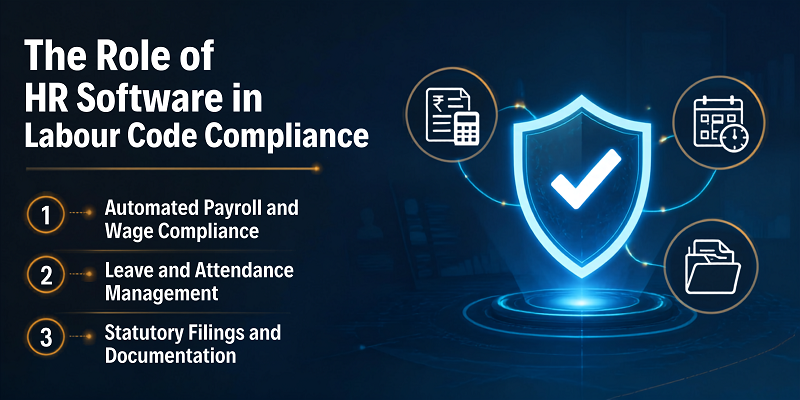
1. Automated Payroll and Wage Compliance
One of the most critical compliance requirements is ensuring that employees are paid correctly and on time. The Code on Wages mandates that businesses maintain transparency in wage computation and deductions. A robust HR system automates salary calculations including basic pay, allowances, overtime, deductions, and statutory components such as PF, ESI, and professional tax. This significantly reduces the risk of manual errors that often lead to underpayment or incorrect deductions.
Platforms like Timelabs come equipped with payroll engines that are pre-configured to handle these statutory requirements. They automatically update when government notifications change wage thresholds or contribution rates, ensuring that businesses stay current without any manual intervention.
2. Leave and Attendance Management
Labour codes specify minimum leave entitlements for employees including earned leave, sick leave, casual leave, and maternity or paternity leave. Managing these manually across a large workforce can result in errors and potential violations. A digital system tracks leave balances, accruals, and carry-forwards automatically, ensuring that the organisation never falls short of its statutory obligations.
Attendance management is equally important. The Occupational Safety, Health and Working Conditions Code lays down specific rules on working hours, rest intervals, and overtime. Automated time-tracking features within Timelabs ensure that working hour data is captured accurately, overtime is calculated correctly, and employees are not made to work beyond legally permitted limits.
3. Statutory Filings and Documentation
Businesses are required to file a variety of statutory returns and maintain specific registers under labour laws. These include PF challan submissions, ESI returns, professional tax filings, and more. Missing a deadline or submitting incorrect information can attract penalties. An integrated HR platform centralises all this information and generates accurate reports and challans that are ready for submission.
Maintaining digital records of all employee-related documents, contracts, and compliance reports also becomes much easier with a dedicated system, reducing the burden of audits and inspections.
How Core HR Software Builds a Compliance-First Culture
Beyond automation, Core HR Software plays a vital role in building a culture of compliance within an organisation. When every HR process from onboarding to exit is managed through a centralised system, there is greater visibility, accountability, and consistency. Here are some key ways this happens:
- Employee data is stored securely and can be retrieved instantly during inspections or audits
- Compliance checklists can be built into onboarding workflows to ensure all statutory requirements are met before an employee starts working
- Alerts and notifications remind HR teams about upcoming deadlines for filings or renewals
- Role-based access controls ensure that sensitive compliance data is only visible to authorised personnel
- Audit trails provide a full record of every action taken within the system, which is invaluable during legal disputes or regulatory reviews
Core HR Software like Timelabs also supports multi-location compliance, which is a critical requirement for businesses operating across multiple states where labour laws may vary. State-specific rules around minimum wages, professional tax slabs, and local leave policies can all be configured within the system, ensuring that no location is inadvertently non-compliant.
Using HR Analytics to Identify Compliance Risks Early
One of the most powerful but often underutilised features of modern HR platforms is HR Analytics. Compliance is not just about meeting present requirements. It is also about identifying patterns and risks that could lead to future violations. Analytics tools give HR leaders real-time visibility into workforce data, enabling them to act proactively.
For example, if data shows that a particular department consistently logs overtime hours beyond the legally permissible limit, the HR team can take corrective action before it becomes a compliance issue. Similarly, if analytics reveal that a section of employees has not received their statutory increments on time, it can be addressed immediately.
HR Analytics dashboards can also track metrics such as:
- PF and ESI contribution accuracy rates across departments
- Leave utilisation and balance status for legal audits
- Compliance completion rates for statutory filings
- Employee contract renewal timelines to avoid lapses
- Workforce headcount data for compliance with factory and shop establishment acts
When HR Analytics is embedded within the same platform handling payroll, attendance, and documentation, the data is more accurate and the insights more actionable. This integration is what separates an advanced HR platform from a basic standalone tool.
Why Businesses Trust Timelabs for Compliance Management
Timelabs has been a trusted name in workforce management for over two decades. With deep expertise in India-specific labour laws and a feature-rich platform that covers attendance, payroll, leave, compliance, and more, it offers businesses a single source of truth for all their HR and compliance needs.
What sets Timelabs apart is its ability to adapt to changing regulations quickly. The platform is regularly updated to reflect the latest government notifications and amendments, so businesses using it can be confident that they are always working with current compliance rules. Whether it is a change in PF wage ceiling, a new state-level minimum wage notification, or an amendment in maternity benefit provisions, the system reflects it promptly.
The platform is scalable and suitable for businesses of all sizes, from small and medium enterprises to large corporations with thousands of employees. Its user-friendly interface ensures that HR teams with varying levels of technical expertise can operate it effectively without requiring extensive training.
Key Benefits of Using HR Software for Labour Compliance
To summarise, here are the primary advantages of using a dedicated HR Software solution for staying labour code compliant:
- Reduces the risk of human error in statutory calculations and filings
- Saves significant time and effort for HR teams by automating repetitive compliance tasks
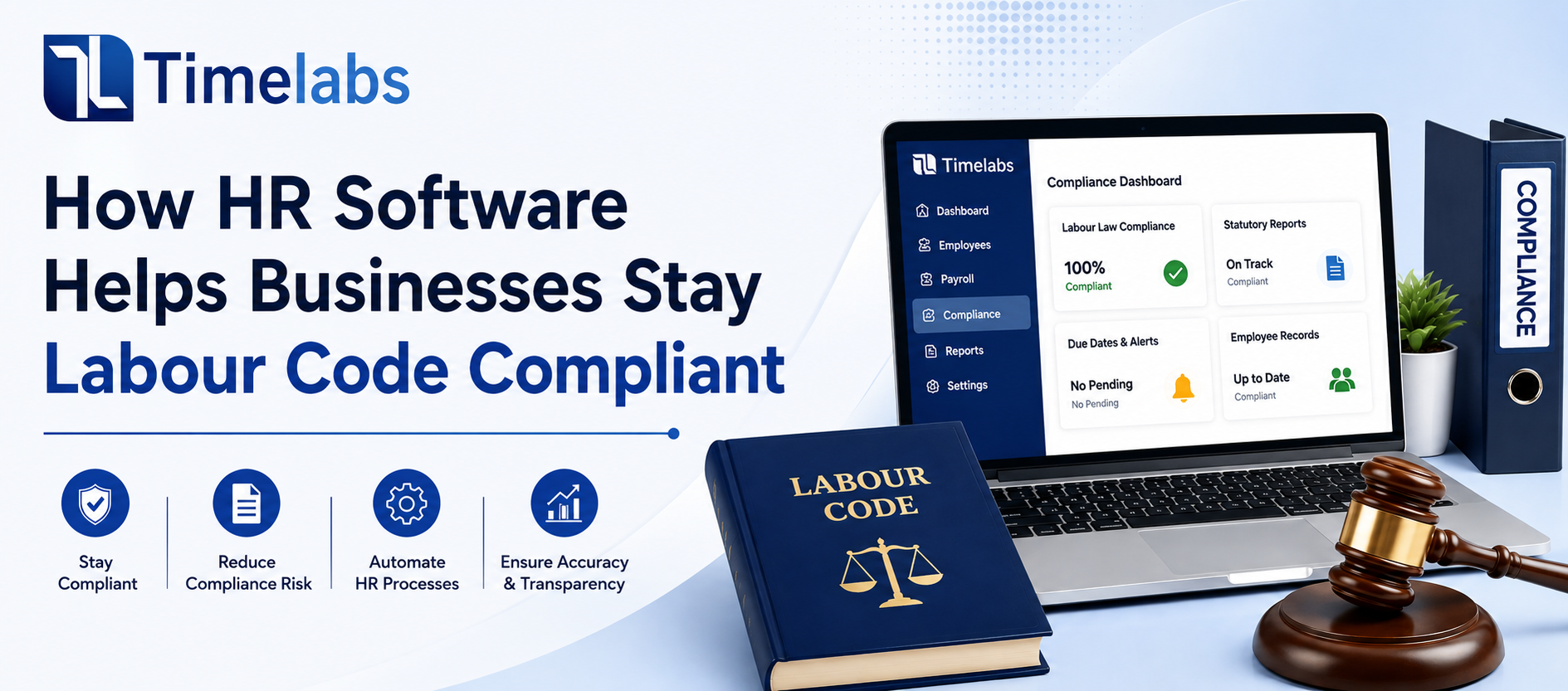
- Provides real-time compliance dashboards for better decision-making
- Maintains complete audit trails for legal protection
- Adapts automatically to regulatory changes without manual updates from the HR team
- Supports multi-state compliance for businesses operating across different geographies
- Improves employee trust by ensuring correct and timely payments and entitlements
A Core HR Software platform with strong compliance capabilities is not just an operational tool. It is a strategic asset that protects the business from legal and financial risks while freeing up HR professionals to focus on people-centric initiatives.
Must Read: How HR Analytics Helps Reduce Costs and Improve Efficiency
Frequently Asked Questions (FAQs)
Q1. What is the role of HR Software in labour code compliance?
Ans: HR Software automates statutory calculations, tracks leave and attendance, generates compliance reports, and ensures timely filing of statutory returns. It reduces the risk of errors and helps businesses consistently meet their labour law obligations.
Q2. How does Core HR Software support multi-state compliance?
Ans: Core HR Software allows businesses to configure state-specific rules including minimum wages, professional tax slabs, and leave policies for different locations. This ensures that every branch or office operates in line with the local labour regulations applicable to it.
Q3. Can HR Analytics help in identifying compliance gaps?
Ans: Yes. HR Analytics provides real-time visibility into workforce data such as overtime patterns, PF contribution accuracy, and leave utilisation. By analysing this data, HR teams can spot potential compliance risks before they escalate into violations.
Q4. Is Timelabs suitable for small businesses?
Ans: Absolutely. Timelabs is designed to cater to businesses of all sizes. Its scalable architecture and user-friendly interface make it a practical choice for small and medium enterprises that want to manage compliance effectively without a large HR team.
Q5. How often is the compliance framework in HR Software updated?
Ans: Leading platforms like Timelabs update their compliance frameworks regularly in response to government notifications, amendments to labour laws, and changes in statutory rates. This ensures that businesses always operate with accurate and current compliance parameters without needing to manually track every regulatory update.