 admin
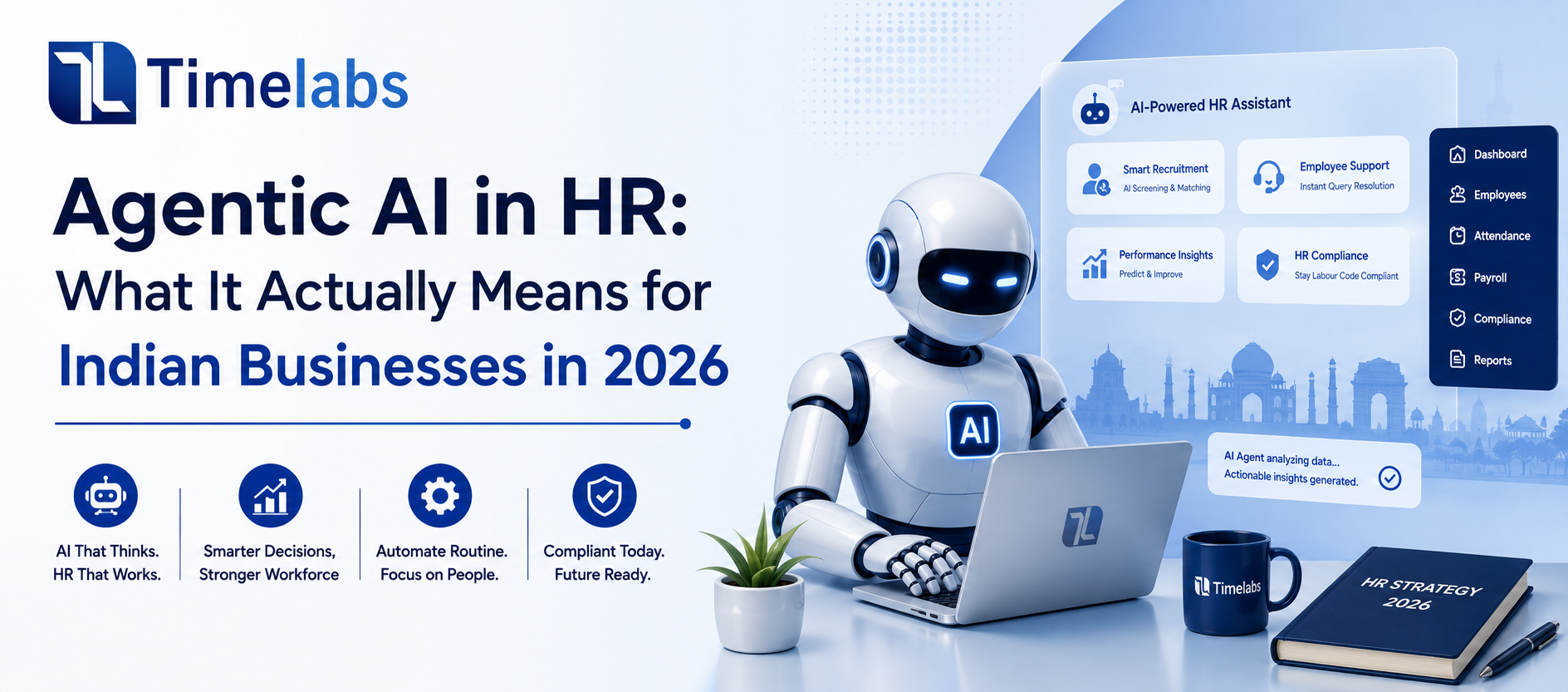
adminImplementing agentic AI HR solutions marks a fundamental shift in how modern organizations manage talent, administrative tasks, and operational compliance. Unlike early conversational bots that required constant human prompts, autonomous systems continuously analyze workforce data, flag operational anomalies, and execute complex workflows without manual supervision. For growing enterprises across India, this technology bridges the gap between passive record-keeping and proactive workforce management.
Indian organizations face unique operational challenges, ranging from handling complex multi-state compliance regulations to managing high-volume recruitment cycles. Traditional software solutions require constant manual input, leaving human resource teams bogged down in administrative tasks. Modern autonomous systems address these exact friction points by taking ownership of repetitive workflows, allowing leaders to focus on strategic growth and employee experience.
What is Agentic AI in HR?
An agentic AI HR framework refers to an intelligent software architecture capable of independent reasoning, planning, and task execution within human resource management. Traditional Generative AI relies on explicit user prompts to draft text or answer questions. In contrast, an agentic system acts as a digital team member that actively monitors data streams, identifies issues, and takes corrective action across multiple enterprise applications.
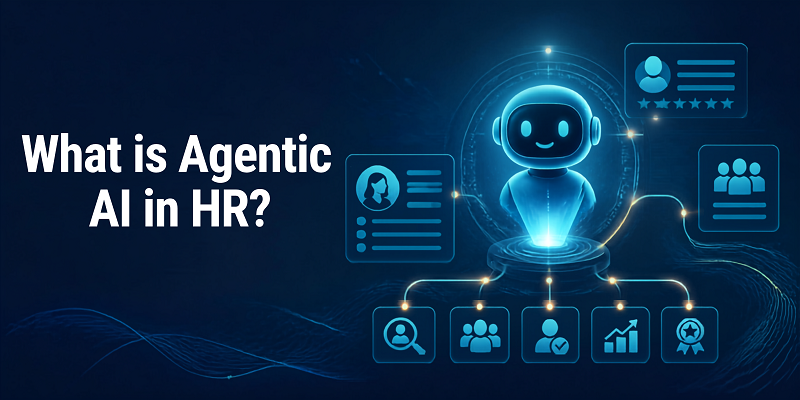
While a traditional chatbot waits for a direct command to generate a response, an autonomous agent monitors incoming data signals continuously. It plans required actions and executes multi-system workflows automatically. In everyday operations, these agents track attendance discrepancies, cross-reference shift logs with leave applications, and reconcile payroll anomalies before finalizing monthly disbursements. When embedded within a broader HRMS infrastructure, the technology connects fragmented software tools, transforming static databases into dynamic execution platforms.
Why It Matters for Indian Businesses
The Indian corporate ecosystem is experiencing rapid scaling alongside increasing compliance requirements. Operations managers and business leaders often struggle with fragmented employee data spread across legacy systems, spreadsheets, and standalone HR Software tools. When administrative processes break down, error rates climb and employee satisfaction drops.
The introduction of agentic AI HR platforms solves this bottleneck by providing continuous oversight. Instead of waiting for an employee to report a discrepancy in their leave balance or pay slip, the system detects the inconsistency automatically. It verifies historical records, updates connected databases, and routes the resolution to the responsible manager for final confirmation. This level of operational autonomy enables mid-sized and enterprise companies to scale their workforce without linearly increasing administrative headcount.
Key Benefits of Autonomous HR Operations
Adopting autonomous intelligent systems delivers measurable improvements across daily operations, data accuracy, and workplace culture. Below are the primary advantages reported by enterprise leaders:
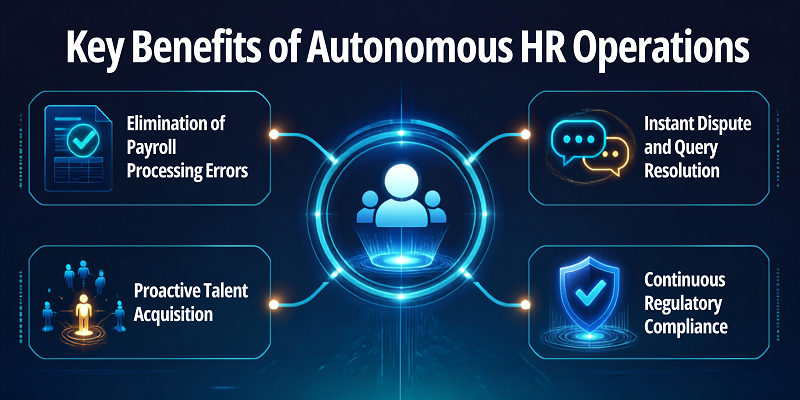
- Elimination of Payroll Processing Errors: Autonomous systems continuously cross-reference attendance data, leave approvals, and tax deductions. By spotting anomalies early, they prevent costly payroll corrections during final processing runs.
- Instant Dispute and Query Resolution: Rather than leaving employees waiting days for ticket responses, autonomous digital assistants resolve policy queries, issue documentation, and update records instantly.
- Proactive Talent Acquisition: Intelligent recruiting agents analyze application funnels, schedule multi-round interviews with hiring managers, and keep candidates updated throughout the hiring process.
- Continuous Regulatory Compliance: Indian labor laws and state-specific regulations require constant updates to payroll and leave calculations. Autonomous agents track legislative changes and update system rules without requiring manual software reconfigurations.
How It Works: The Four-Layer Process
Understanding how these autonomous agents function helps organizations integrate them effectively into existing tech stacks. Modern enterprise solutions rely on four integrated operational layers:
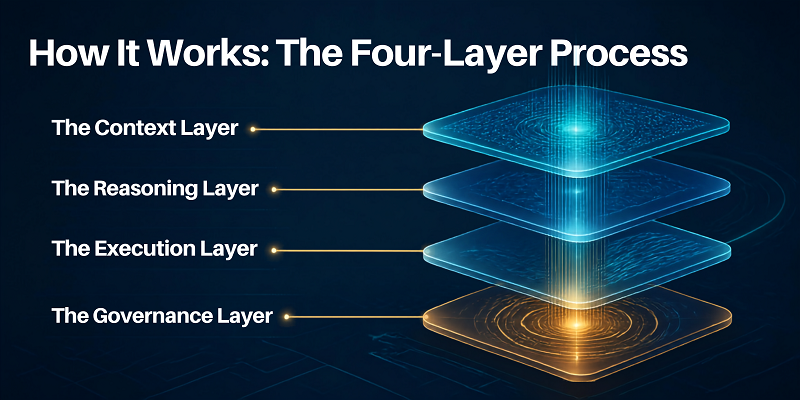
- The Context Layer: The system ingests data from attendance machines, communication apps, and employee profiles to construct a unified view of daily operations.
- The Reasoning Layer: Using organizational policies and decision frameworks, the system evaluates incoming data against standard operating procedures.
- The Execution Layer: The autonomous agent triggers APIs across connected tools to carry out necessary tasks, such as updating an HRMS record or generating a compliance report.
- The Governance Layer: Built-in guardrails ensure that high-stakes decisions, such as salary adjustments or terminations, require explicit human authorization before execution.
To illustrate this in practice, consider an advanced enterprise ecosystem like Timelabs. Through specialized modules like Setu AI and TIVA, the system operates as an active agent rather than a simple conversational bot. When a payroll calculation reveals an unmatched attendance record, Setu AI flags the underlying discrepancy, cross-verifies supervisor approvals via TIVA, and corrects the entry automatically. This ensures payroll accuracy while eliminating manual review cycles for administrative staff.
Best Practices for Implementation
Deploying autonomous intelligence requires structured planning to ensure data safety, system alignment, and employee trust. Organizations aiming for smooth adoption should follow these practical guidelines:
- Start with High-Volume Pain Points: Begin deployment in areas with heavy administrative workloads, such as leave reconciliation, expense claims, or initial resume screening.
- Maintain Human-in-the-Loop Safeguards: Establish clear authorization thresholds. Standard tasks can run with full autonomy, but sensitive personnel decisions must always route through human managers.
- Standardize Internal Documentation: Autonomous agents rely on clear organizational policies to make accurate decisions. Clean up employee handbooks, leave policies, and approval hierarchies before activating system reasoning.
- Audit System Workflows Periodically: Regularly review execution logs to verify that the software interprets company policies correctly and acts within defined governance boundaries.
Common Mistakes to Avoid
While autonomous technology offers significant operational value, poor execution strategy can lead to unnecessary friction. Business leaders should watch out for these frequent implementation pitfalls. Treating autonomous agents like simple chatbots often results in underutilization. Deployment strategies must grant agents API access to connected platforms so they can perform end-to-end actions rather than simply generating written responses.
Another common mistake is bypassing data cleansing. Feeding outdated employee records or contradictory policy documents into an autonomous platform causes logic errors and processing delays. Additionally, failing to communicate the transition clearly to employees creates unnecessary anxiety about job roles. Teams need clear guidance on how autonomous tools support their day-to-day work.
Must Read: Labour Codes 2026 Compliance Checklist for Indian Businesses
Conclusion
The evolution of workplace technology has shifted the focus from static automation to intelligent, autonomous execution. Implementing an agentic AI HR framework allows modern businesses to eliminate repetitive administrative burdens, improve payroll precision, and resolve workplace queries instantly.
By connecting fragmented operational tools and handling complex tasks independently, these platforms empower teams to shift away from manual troubleshooting and focus on strategic organizational growth. Forward-thinking leaders who adopt intelligent platforms like Timelabs build a resilient, efficient, and future-ready workforce infrastructure.
Frequently Asked Questions
Q1. How does autonomous AI differ from a standard HR chatbot?
Ans: A standard chatbot requires direct human prompts to answer questions or generate text responses. An autonomous AI agent monitors data continually, identifies operational tasks independently, and executes complete workflows across multiple software applications without requiring continuous human input.
Q2. Can autonomous systems handle payroll reconciliation across different Indian states?
Ans: Yes, modern autonomous platforms track varying state labor laws, professional tax structures, and local leave mandates. The system continuously cross-references attendance records, tax categories, and approved leave days to ensure accurate calculations before final payroll generation.
Q3. Will deploying autonomous platforms replace existing human resource teams?
Ans: No, the primary goal of autonomous technology is to eliminate repetitive administrative tasks like manual data entry, attendance tracking, and initial ticket routing. This operational shift allows internal teams to dedicate more focus to talent development, workplace culture, and strategic business planning.
Q4. What security controls protect sensitive employee data during autonomous execution?
Ans: Enterprise solutions utilize strict role-based access control, end-to-end data encryption, and clear governance protocols. High-stakes actions, including salary changes or contract updates, automatically trigger mandatory human review steps before execution.
Q5. How long does it take to integrate autonomous agents into existing enterprise software?
Ans: Deployment timelines depend on data cleanliness and system architecture. Most organizations running cloud-based management systems can configure base workflows, connect APIs, and launch primary query resolution modules within a few weeks.