 admin
adminIndia’s labour law landscape is undergoing its most significant transformation in decades. The four Labour Codes, consolidating 29 existing central labour laws, are set to bring sweeping changes to how businesses handle wages, social security, industrial relations, and occupational safety. With 2026 approaching, organisations across India need to move from awareness to action.
For HR and finance teams, compliance is not just a legal obligation. It directly affects payroll calculations, employee benefits, working hour structures, and the way employment contracts are written. Businesses that wait until the last moment to prepare will face significant operational disruption.
This checklist covers the key compliance areas Indian businesses must address, along with how technology can support a smoother transition.
Understanding the Four Labour Codes
Before jumping into the checklist, it is important to understand what the four codes cover and why each one matters for your day-to-day HR and payroll operations.
Code on Wages, 2019
This code consolidates the Minimum Wages Act, Payment of Wages Act, Equal Remuneration Act, and Payment of Bonus Act into a single framework. It introduces a uniform definition of wages that directly impacts how allowances, basic pay, and statutory deductions are calculated.
Code on Social Security, 2020
This code covers Provident Fund, Employee State Insurance, Gratuity, Maternity Benefit, and other social security measures. It extends coverage to gig workers and platform workers, a significant expansion from earlier laws.
Industrial Relations Code, 2020
This code addresses trade unions, collective bargaining, and conditions for layoffs, retrenchment, and closure. Organisations with 300 or more workers will need government permission before retrenchment, up from the earlier threshold of 100.
Occupational Safety, Health and Working Conditions Code, 2020
This code governs working hours, leave entitlements, health and safety standards, and conditions for contract labour. It introduces more structured provisions for working hours, rest intervals, and overtime compensation.
The Compliance Checklist for 2026
1. Review and Revise the Wage Structure
Under the new definition of wages in the Code on Wages, the basic pay component must be at least 50 percent of the total CTC. Many organisations currently have a structure heavily weighted towards allowances to reduce PF liability. This will need to change.
Steps to take:
- Audit current salary structures across all employee bands
- Identify employees whose basic pay falls below 50 percent of gross
- Recalculate PF, ESI, and gratuity impact based on the revised wage definition
- Model the financial impact on both employer costs and employee take-home pay
- Update offer letter templates and employment contracts accordingly
2. Recalculate PF and Gratuity Contributions
The revised wage definition will increase the base on which PF and gratuity are calculated for many employees. This directly affects employer contribution costs and requires updates to payroll configuration.

Businesses using Payroll Software In India will need to ensure their platform supports the new wage definition and can automatically apply the updated calculation rules across all employee categories. Manual recalculation at scale is not feasible and significantly increases the risk of errors.
3. Update Working Hours and Leave Policies
The new codes allow for flexibility in working hour arrangements, including the possibility of a four-day work week with longer daily hours in certain sectors. Overtime compensation rules have also been clarified.
HR teams need to:
- Review current weekly hours and overtime policies
- Update leave policy documentation to align with new entitlements
- Ensure attendance and shift management systems can handle revised working patterns
- Train managers on new overtime calculation methods
4. Extend Social Security Coverage to Contract and Gig Workers
One of the most significant changes in the Code on Social Security is the explicit inclusion of gig workers, platform workers, and unorganised sector workers under the social security framework.
Organisations that engage contract staff or platform-based workers will need to review their obligations carefully. A Core HR Software system that tracks all categories of workers, including contractual and third-party staff, will be essential for maintaining accurate records and meeting contribution requirements.
5. Revise Employment Contracts and Standing Orders
The Industrial Relations Code requires organisations with 300 or more workers to maintain standing orders. Smaller organisations are also encouraged to formalise employment terms in line with the new code provisions.
All employment contracts should be reviewed to:
- Reflect updated definitions of wages, working hours, and leave entitlements
- Include provisions for the four-day work week if applicable to your sector
- Align notice periods and retrenchment terms with the new thresholds
- Address social security coverage for non-traditional employment arrangements
6. Register on the Unified Shram Suvidha Portal
The government has been consolidating labour law registrations and returns under a single unified portal. Businesses need to ensure they are registered and that their annual returns and compliance filings are being submitted through the correct channels.
This includes maintaining digital records of all filings, acknowledgements, and compliance documentation for audit purposes.
7. Train HR and Finance Teams on the New Framework
Compliance is not just a technology or process challenge. It is also a knowledge challenge. HR managers, payroll executives, and finance teams need to understand the practical implications of each code before implementation.

Training sessions should cover:
- The revised wage definition and its impact on all statutory calculations
- Updated contribution rates and calculation methods for PF, ESI, and gratuity
- Changed thresholds for retrenchment and layoff requirements
- New record-keeping and filing obligations under the unified framework
How Technology Simplifies Labour Code Compliance
Automating Statutory Calculations
The single biggest operational challenge of the Labour Codes is the change to statutory calculations. When basic pay definitions change, every downstream calculation changes with it: PF contributions, ESI deductions, gratuity accruals, and bonus eligibility.
Reliable Payroll Software In India handles these calculations automatically. When configured correctly, it applies the right formula to the right employee category, generates accurate payslips, and produces compliance-ready reports without requiring HR teams to manually verify every number.
Timelabs payroll module is built around Indian statutory compliance, including PF, ESI, TDS, professional tax, and Labour Welfare Fund. As the Labour Codes are notified, platforms like this will need to be updated to reflect the new calculation rules, making it critical to work with a vendor that actively maintains regulatory compliance.
Maintaining Centralised Employee Records
The Labour Codes require organisations to maintain detailed records for all categories of workers. A Core HR Software system that stores employee data, contract details, attendance records, and statutory filings in a single location significantly reduces the compliance burden.
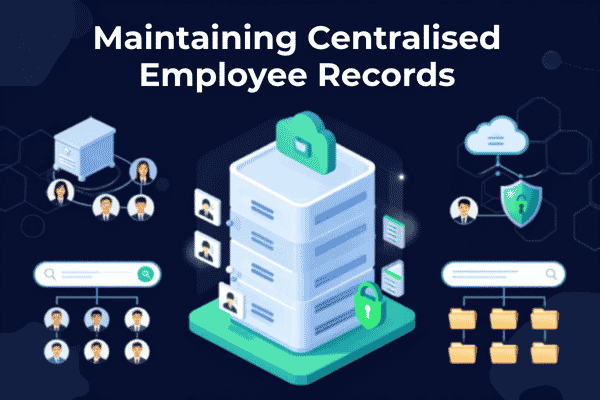
When an audit occurs or a return needs to be filed, HR teams should be able to pull accurate, current data without hunting through spreadsheets or disconnected systems.
Configuring Leave and Attendance for New Work Patterns
Core HR Software platforms that include leave and attendance modules will need to support revised leave entitlements, flexible work schedules, and the new overtime calculation methods introduced by the Occupational Safety, Health and Working Conditions Code.
Organisations using Timelabs HRMS can configure shift policies, leave types, and overtime rules within the platform, ensuring that employee data is accurately captured and reflected in payroll without manual intervention.
Generating Compliance Reports and Returns
Payroll Software In India that supports statutory reporting will be a significant advantage during the transition. Automated generation of PF challans, ESI returns, TDS statements, and bonus registers reduces the risk of filing errors and ensures that returns are submitted on time.
Businesses using Timelabs already benefit from automated statutory reporting within their HRMS. As the Labour Codes are notified, ensuring these reports are updated to reflect the new frameworks will be a priority for any compliant organisation.
Key Dates and Action Points
While the exact notification dates for each state may vary, businesses should treat 2026 as the target year for full operational compliance. Here is a suggested action timeline:
- Immediately: Conduct a wage structure audit and model the financial impact of the 50 percent basic pay rule
- Q1 2026: Update payroll configurations and employment contracts to reflect revised wage definitions
- Q2 2026: Complete HR and finance team training on the new compliance framework
- Q3 2026: Register on the unified portal, update standing orders, and ensure all filings are current
- Ongoing: Monitor state-specific notifications and update systems as individual states notify their rules
Conclusion
The Labour Codes represent the most comprehensive reform of Indian labour law in over six decades. For businesses, the compliance window is narrowing. The organisations that act now, by auditing their wage structures, updating their systems, and training their teams, will be far better positioned than those that wait for final notifications before taking action.
Technology will play a central role in making this transition manageable. From automated payroll calculations to centralised employee data management and statutory reporting, the right HR platform will reduce the manual burden and lower compliance risk significantly.
If your organisation is evaluating its readiness for the Labour Codes 2026, Timelabs offers a comprehensive HRMS platform that covers payroll, attendance, leave, core HR, and statutory compliance in a single integrated system. Getting your HR technology in order is one of the most practical steps you can take right now.
Frequently Asked Questions (FAQs)
Q1. What are the four Labour Codes and when will they come into effect?
Ans: The four Labour Codes are the Code on Wages 2019, the Code on Social Security 2020, the Industrial Relations Code 2020, and the Occupational Safety, Health and Working Conditions Code 2020. The central government has passed all four codes, but they come into full effect when individual states notify their rules. Most states are expected to be fully compliant by 2026, though businesses should monitor state-specific notifications closely.
Q2. How does the new definition of wages affect payroll calculations?
Ans: Under the new definition, the basic pay component of an employee’s CTC must be at least 50 percent of the total salary. Since PF, ESI, and gratuity are calculated on the basis of wages as newly defined, organisations that currently pay a higher proportion of CTC as allowances will see an increase in statutory contributions. This affects both employer costs and employee net pay, and requires immediate payroll configuration updates.
Q3. Do the Labour Codes apply to gig workers and contract employees?
Ans: Yes. The Code on Social Security explicitly extends social security coverage to gig workers, platform workers, and unorganised sector employees. Businesses that engage contract staff or work with platform-based labour arrangements will need to assess their obligations under the new framework and update their HR records accordingly.
Q4. What changes do businesses need to make to their employment contracts?
Ans: Employment contracts will need to reflect the updated wage definitions, revised working hour arrangements, new leave entitlements, and updated terms around retrenchment and notice periods. Businesses should also review their standing orders, particularly if they employ 300 or more workers, as the threshold for mandatory government approval before retrenchment has changed under the Industrial Relations Code.
Q5. How can HR software help with Labour Code compliance?
Ans: HR software simplifies Labour Code compliance by automating statutory calculations based on updated wage definitions, maintaining centralised records for all employee categories, generating compliance-ready reports and statutory returns, and supporting revised leave and attendance configurations. Platforms that are built around Indian statutory frameworks and actively updated for regulatory changes will provide the most reliable compliance support as the codes are notified state by state.